
Rotobrush Air Duct Cleaning in Highbridge: A Homeowner’s Guide
Most homeowners in Highbridge call a duct cleaner and never ask which machine is coming into their house. That’s the mistake. Rotobrush equipment works on a contact-agitation principle: rotating brushes knock debris loose while vacuum extraction pulls it out at the same time. Sounds simple, and it is – until the tool meets the wrong duct material. Which brushes, what speed, what diameter, and whether the system is flex or aging sheet metal decides whether a cleaning helps or quietly damages seams that were already failing. Here’s how to tell what you have before anyone arrives.
If you’d rather have a trained set of eyes confirm it, call (888) 219-1385. We answer 24/7, with fast dispatch from 7am to 7pm, Sunday through Friday.
Key Takeaways
- Rotobrush is a contact-agitation system: brushes dislodge, vacuum extracts, in the same pass.
- It performs best in flex duct and smooth-bore round metal, the duct types common in Highbridge’s post-1980s residential construction.
- Aging sheet metal with failing seams needs gentler methods, not aggressive brushing.
- Camera inspection before and after is part of the job, not a bonus.
- Ask which tool and which brush diameter will be used. A company that can’t answer is guessing.
How does Rotobrush duct cleaning actually work?
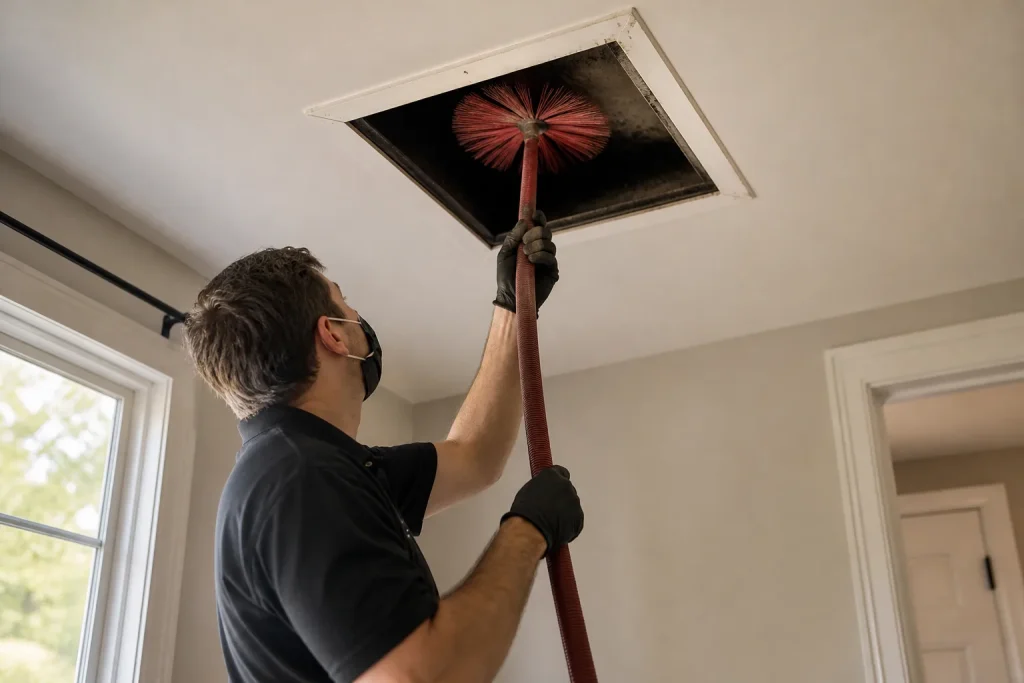
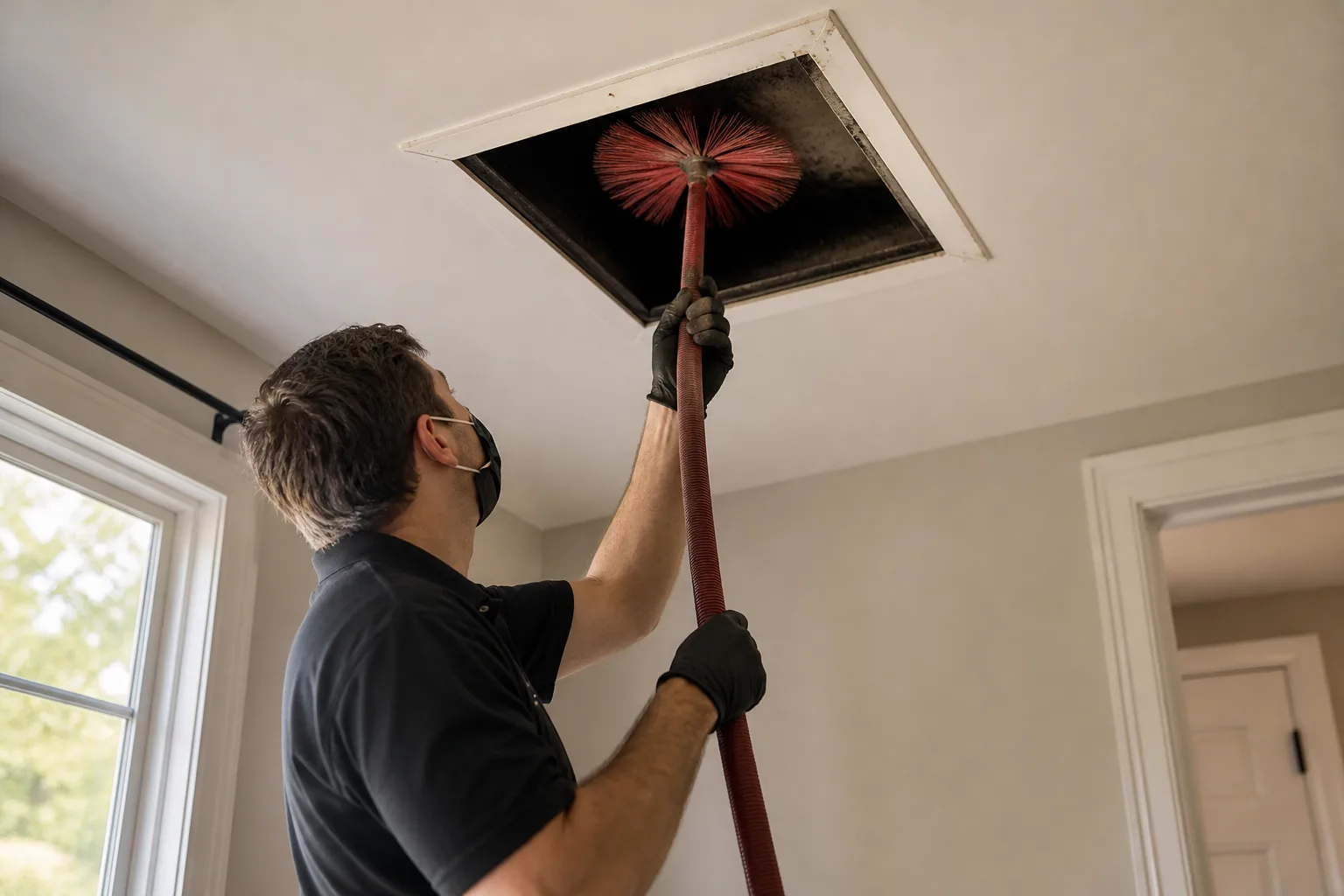
Rotobrush cleaning is mechanical, not chemical. A rotating brush head travels through the duct interior on a flexible shaft, physically scuffing debris off the walls while a high-capacity vacuum running at the same time captures what breaks free. The BrushBeast family of machines pairs those two actions in one unit, so loosened dust doesn’t settle back downstream. Brush heads come in different diameters and stiffness levels, and the technician selects based on duct size and material. In our experience, that selection is where a good cleaning and a careless one split apart.
The camera component matters just as much. A Rotobrush service should include inspection footage of the duct interior before work begins and again after it ends. Before footage tells you what’s actually in there: dust build-up, debris, pest evidence, moisture staining, or a joint that’s already separating. After footage proves the work happened. Any company that skips the camera isn’t shortcutting paperwork – it’s skipping the part where it would have to show you what it found.
Trained hands make the difference on the controls. Our technicians have up to 14 years of experience running Rotobrush and Nikro systems, and we use Abatement Technologies filtration equipment on jobs that call for contaminant-level control.
Which duct materials is Rotobrush best suited for?
Rotobrush is at its strongest in flexible duct and smooth-bore round metal duct. Flexible duct – the corrugated, silver-jacketed material common in Highbridge homes built from the 1980s onward – has ridges and valleys that trap dust in a way rigid duct doesn’t. Contact agitation is exactly the right answer there, because the brush reaches into the corrugations that airflow alone can’t clear. Smooth-bore round metal is the other good match: a hard, uniform interior where a correctly sized brush sweeps cleanly and the vacuum keeps up.
Risk shows up in two places.
- Aging sheet metal with failing seams. Older rigid duct systems in Highbridge can have taped or mastic joints that have dried out and started to separate. A brush run at the wrong speed or diameter can pry those seams open further, and once a joint opens, you’ve traded dust for air loss.
- Asbestos-era duct wrap. Some older duct insulation and wrap materials predate modern safety standards. Those need identification before any mechanical cleaning, not a brush sent in blind.
Neither situation means the duct can’t be cleaned. It means the method has to match. A technician who inspects first and adjusts brush selection is doing the job correctly. One who reaches for the same setup on every house isn’t.
How do you identify your duct material before a service call?
You can learn a lot in five minutes without opening anything up. Start where the ductwork is visible: a basement, utility closet, garage, or attic access panel.
- Look at the material. Corrugated silver flex jacket means flexible duct. Rigid rectangular or round pipe with a hard metal surface means sheet metal.
- Check the joints. Look at how sections are connected. Tape that’s peeling, cracking, or lifting, and mastic that’s flaking, both suggest the system is older and more fragile.
- Note the insulation. Wrapped or lagged duct in an older home is worth flagging. Mention it on the phone so the company can plan for it.
- Count the supply runs you can see. A rough count helps the company estimate scope before arriving.
- Photograph what you find. A phone photo of a duct run and its joints gives the technician real information to work with.
Bring that information to the call. In Highbridge, asking “which brush diameter will you use on my flex runs?” or “how will you handle the taped seams in my sheet metal?” separates companies that plan from companies that show up and improvise. It’s a fair question, and a professional should welcome it.
Rotobrush vs. air-whip and skipper ball cleaning: which method fits your system?
Contact agitation and air-based cleaning solve different problems. Air-whip and skipper ball tools use compressed air to blast debris loose from duct walls and drive it toward the vacuum. They work well in rigid metal duct with smooth, hard interiors, and they can reach long straight runs efficiently. But air alone doesn’t scrub a surface. Caked-on dust in corrugated flex duct can survive a blast of air and settle again once the airflow stops.
That’s the case for Rotobrush in Highbridge homes with flex systems. The brush actually touches the duct wall and removes the layer, rather than persuading it to move. Flexible duct and smooth-bore round metal both respond to that contact approach. Rigid metal runs with sound joints can often be cleaned with either method, and in practice many thorough jobs use both tools together, matching each tool to the run it suits.
Where a company’s method doesn’t match your duct type is where problems start. A high-pressure air tool in a fragile sheet metal system with failing seams can blow joints apart. A brush run at the wrong speed in delicate duct can do similar damage. The right question isn’t “which machine do you use” – it’s “how will you decide which machine to use on my system.” Any company that can answer that clearly is one worth talking to.
What should a camera inspection show you before and after?
A proper camera inspection is not a marketing extra. It’s the record of the job. Before cleaning, the footage should show you the interior of your actual duct runs, with the technician pointing out what’s visible: dust accumulation, debris, evidence of moisture, compromised joints, or pest activity. Ask to see it on the monitor while they explain it. You should be able to recognize what you’re looking at.
After cleaning, the same runs should be filmed again. The comparison is the proof. If the “before” and “after” footage was shot in different places, or the “after” is generic, you’re not looking at an inspection. You’re looking at a sales video.
We show you what we found before we start and after we finish. That’s not a courtesy, it’s how a job gets verified. A cleaning you can’t see is a cleaning you’re taking on faith.
When to call a pro – and related services in Highbridge
Bring in a trained technician when you notice worsening allergies indoors, dust settling faster than it used to, musty odors when the system runs, or a jump in energy bills with no other explanation. Those are signs the air pathway needs a proper look, and they’re not problems a consumer-grade shop vac and a vent cover can solve. High-tension components, electrical connections inside air handlers, and fragile duct systems all deserve trained hands.
Rotobrush cleaning is one part of a full-system approach. Once the ducts are clean, the next questions are whether the system leaks and whether filtration should be upgraded. We handle that in one visit: cleaning, duct repair and sealing, and air-quality upgrades with Honeywell and Aprilaire products, plus Guardsman-grade sanitizing where contamination calls for it. Dryer-vent cleaning ties fire-safety into the same appointment. For the full picture on our core services, see air duct cleaning, HVAC cleaning, and dryer vent cleaning.
What happens when you call
- 1
A real person answersNo phone trees – you reach a local pro.
- 2
You get an upfront price rangeHonest numbers before anyone is dispatched.
- 3
A background-checked tech heads outLicensed & insured, dispatched right away.
- 4
You approve before work beginsNothing starts until you say go.
The Bottom Line
Rotobrush is a genuinely effective system, and in Highbridge’s newer flex-duct homes it’s often the right tool for the job. The catch is that it’s a tool, not a universal answer. Match the method to the duct material, insist on camera inspection before and after, and ask which brush diameter and speed will be used. If you’re in Highbridge and want a straight answer about your system, contact Air Duct Cleaning Highbridge for a free estimate – call (888) 219-1385. We clean the system, then we seal it, because a leaky duct undoes everything.
Frequently Asked Questions
Often yes, but only after inspection. Old sheet metal with taped or mastic joints that have dried and separated can be damaged by aggressive brushing at the wrong speed. A technician should inspect the seams first, then select a gentler brush setup or a different method if the duct is fragile. Ask about it before the work starts.
Look at any visible ductwork in your basement, garage, attic, or utility closet. Corrugated silver flex jacket means flexible duct. Hard, smooth rectangular or round pipe means sheet metal. Check the joints too – peeling tape or flaking mastic signals an older system worth flagging on the phone. Call (888) 219-1385 for an exact quote – estimates are free.
For corrugated flex duct, contact agitation usually removes more than air alone, because the brush physically scuffs the ridges where dust collects. Air-whip tools work well in smooth rigid metal. A thorough job often uses both, matched run by run. Call (888) 219-1385 for an exact quote – estimates are free.
Because it’s the only way to verify the work was done. Before footage shows what’s in the duct; after footage shows it’s gone. A company that skips the camera is asking you to trust a claim you can’t check. If you’re in Highbridge and want to see your own ducts before and after, call (888) 219-1385. We answer 24/7, with fast dispatch from 7am to 7pm, Sunday through Friday.
Written by the team at Air Duct Cleaning Highbridge.
Need Air Duct Cleaning Help?
Call Air Duct Cleaning Highbridge - the local pro we connect you with is licensed and insured, here with fast help in Highbridge.
(888) 219-1385