
Top Signs You Need Air Duct Cleaning Service – Don’t Ignore These
Dust on a supply register rarely means your ducts are full of debris. In most homes we inspect, surface dust at the vent points to a filter that’s undersized for the system or sitting loose in its frame, letting air slip past dirty. Meanwhile the ductwork itself may be relatively clean, or worse, contaminated in a section you can’t see. Telling those two situations apart is the whole game, and generic “10 signs you need duct cleaning” lists blur them together. Here’s how to read the evidence in your own Highbridge home before you call anyone.
Register Dust vs. Duct Contamination: What’s the Difference?
Register dust is a filtration and airflow problem. Internal duct contamination is a debris and moisture problem. They look similar at the grille and have nothing else in common.
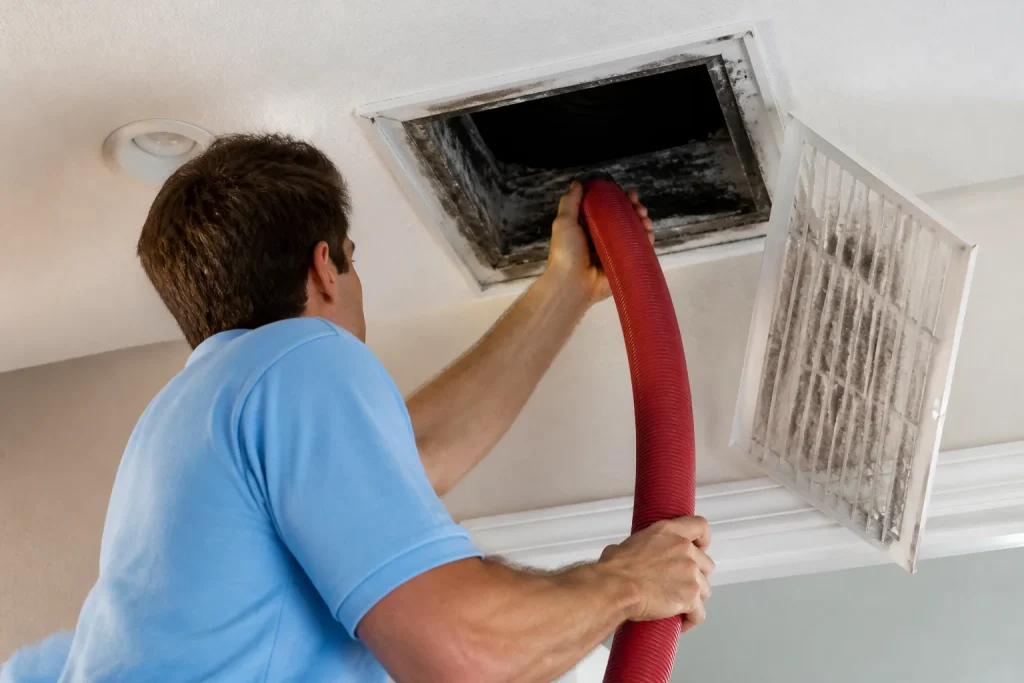
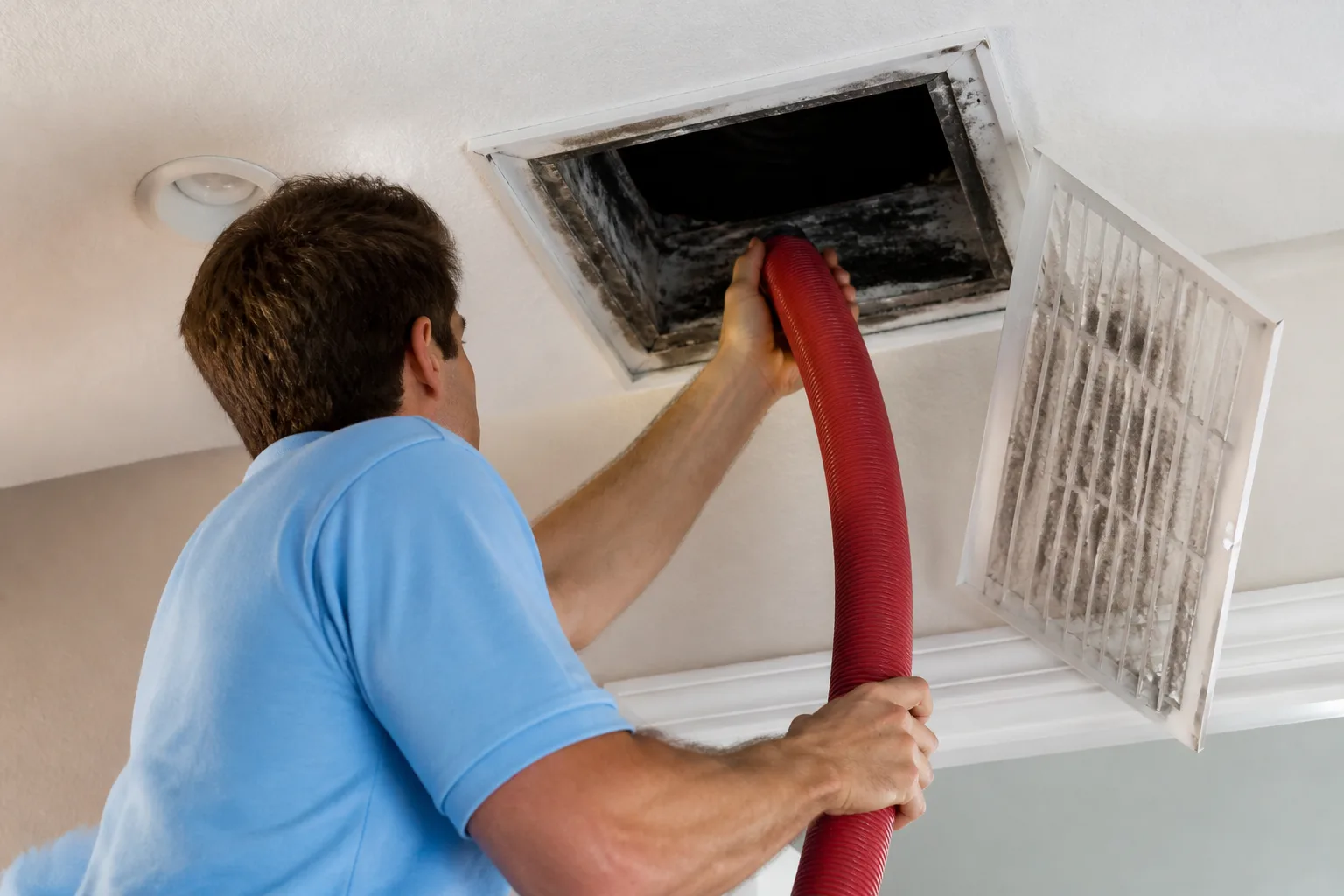
Surface dust on a supply register is usually light, even, and wipes off easily. It collects because the filter upstream isn’t catching fine particles, or because unfiltered air is bypassing the filter through gaps around the frame. If you pull the register and the inside of the boot looks clean, the duct behind it probably is too. Fixing this is a filter and sealing fix, not a cleaning job.
Internal contamination presents differently. You’re looking for:
- Dark, sticky residue rather than dry dust – a sign of moisture mixing with particles
- Debris that brushes off in sheets or clumps instead of a fine film
- Visible buildup past the boot, on the duct wall itself
- Pest evidence: droppings, nesting material, or chewed insulation
- A musty or earthy smell that gets stronger the deeper you look
When we inspect a system in Highbridge, we use a camera to check the run beyond the register, because that’s where the answer actually lives. A register wipe-down tells you almost nothing on its own.
HVAC Performance Signs That Point to Duct Restriction
Uneven room temperatures, longer run cycles, and weak airflow at specific registers all suggest your ducts are restricted or leaking. These are performance indicators, and they show up long before anything looks dirty.
Pay attention to these patterns:
- One room never gets comfortable. If a bedroom upstairs runs hot in summer while the hallway is fine, that branch of ductwork may be crushed, disconnected, or packed with debris.
- The system runs longer than it used to. Restricted airflow forces the blower to work harder and the cycle to stretch out. Your energy bill follows.
- Airflow feels weak at some registers and strong at others. Hold your hand at each supply on a single system cycle. Big differences between rooms mean a distribution problem inside the ducts.
- Whistling or rushing sounds at the grilles. That’s air squeezing through a partial blockage or a gap.
These signals deserve a proper look. If you’ve already tried filter changes and the pattern holds, it’s worth having the full path checked. Our air duct cleaning service starts with an inspection precisely so we don’t guess at the cause. In Highbridge, we’ve found that the leaky-joint culprit shows up as often as the dirty-duct one.
What Musty, Burning, or Rodent Odors Actually Tell You
Odors moving through the system are the most reliable diagnostic clue a homeowner has, because smell travels from wherever the contamination sits. Each type of odor points to a different condition.
Musty, damp, or earthy smells usually mean moisture has gotten into the duct interior or the air handler area. That moisture feeds microbial growth on duct surfaces and insulation. It won’t clear up with a filter change, and it’s the strongest reason to look deeper.
A burning or hot-dust smell is often the blower motor or a heating element rather than the ducts themselves, but debris sitting against a heat exchanger can produce it too. Treat this one as a safety check, not just a comfort issue, and have it looked at promptly.
Rodent or ammonia odors mean pests have been inside the ductwork. Droppings and nesting material contaminate the run, and cleaning has to include sanitizing the interior afterward, not just vacuuming it out.
Short version: an odor that cycles on with the fan is coming from the system. Note which rooms it’s strongest in, and tell the technician. That detail alone speeds up the diagnosis considerably.
How to Inspect Your Own Ducts (Safely)
You can check a register or two yourself in about ten minutes with a screwdriver and your phone. What you learn will tell you whether a professional inspection is worth scheduling.
- Turn the system off at the thermostat before you start.
- Remove one or two supply registers with a screwdriver. Pick a room that feels weak and one that feels strong.
- Shine your phone flashlight into the boot and as far down the duct as you can see.
- Look at the duct wall, not the register. Clean metal or flex liner is a good sign. Heavy dust, dark staining, debris piles, or pest evidence is not.
- Wipe a finger along the inside wall. Dry, light dust is normal. Sticky residue or clumping debris is not.
- Repeat at a return grille if you can reach it, since returns often show contamination first.
Take photos as you go. If you decide to call, those photos are genuinely useful – they let the technician plan the visit and show you exactly what the camera finds. One caution: don’t reach tools or hands deep into a duct. You can damage flex liner or dislodge insulation, and if you see wiring or a wet patch, stop and call a professional rather than investigating further. Electrical and moisture problems inside a system are not a DIY situation.
If you’d rather skip the flashlight work, call (888) 219-1385. We answer 24/7. Fast dispatch from 7am to 7pm, Sunday through Friday.
Post-Event Triggers That Make Cleaning Non-Optional
Some situations call for duct cleaning regardless of what you can see at the registers. After these events, contamination is a near certainty, and waiting lets it spread through the whole system.
- Recent renovation or drywall work. Sanding dust and construction debris get pulled straight into returns and settle throughout the ductwork. This is the single most common post-event trigger we see.
- Rodent or pest evidence anywhere in the home. If you’ve found droppings in a crawlspace or attic, assume the ducts are affected until proven otherwise. Cleaning has to include sanitizing, which is why we carry Guardsman-grade protective products for the job.
- Water intrusion near the air handler. A leak, a flooded basement, or condensation problems can wet insulation and duct interiors. Moisture plus organic dust is the recipe for microbial growth.
- Smoke or fire damage nearby. Soot travels through the air path and coats duct surfaces.
In each case, the goal is a full-pathway response: clean, repair any compromised sections, seal the joints, and sanitize. Our technicians use Abatement Technologies air-filtration equipment on these jobs specifically because contaminant control matters more than surface appearance. Our technicians have up to 14 years of experience reading exactly these situations in Highbridge homes.
When to Call a Pro
If you’ve checked a register or two and found sticky residue, visible debris past the boot, pest evidence, or a musty smell that comes and goes with the fan, it’s time for a proper inspection. The same goes for any performance pattern – uneven rooms, long cycles – that filter changes haven’t fixed.
A real diagnostic visit uses professional equipment, not a shop vac. We work with Rotobrush and Nikro systems, the same class of machinery used in commercial HVAC work, plus camera inspection so you can see what we see. We show you what we found before we start and after we finish. And because we handle HVAC cleaning, duct repair and sealing, and air-quality upgrades together, you’re not coordinating three separate contractors. If our inspection turns up a filter or humidity issue rather than dirty ducts, we’ll tell you that plainly – we stock and install Honeywell and Aprilaire products, so the fix matches the actual problem.
Related services in Highbridge: along with duct cleaning, we handle dryer vent cleaning, which belongs in the same air-safety conversation as your ducts. Lint buildup in a dryer vent is a fire hazard, and it gets checked in the same visit.
The Bottom Line
Don’t treat visible vent dust as the deciding factor. Check for the real indicators: sticky residue or debris past the boot, uneven airflow between rooms, odors that cycle with the fan, and any recent renovation, pest, or water event. Document what you find with photos. If the evidence points to contamination inside the ducts rather than a filter problem, a professional inspection settles it quickly and tells you exactly what needs doing – cleaning, repair, sealing, or all three.
If you’re in Highbridge and need help, Air Duct Cleaning Highbridge offers free estimates. Call (888) 219-1385. We answer 24/7. Fast dispatch from 7am to 7pm, Sunday through Friday.
Frequently Asked Questions
Look for internal evidence, not surface dust. Sticky or clumped debris past the register boot, pest droppings, a musty smell that cycles with the fan, or uneven airflow between rooms all point to a real problem. Dry, light dust at the grille alone usually means a filter issue. Call (888) 219-1385 for a free estimate – an inspection gives you a definite answer.
Not necessarily. Dust blowing from a supply register often means the filter is undersized or air is bypassing it through gaps in the frame. The duct behind the register can be perfectly clean. A camera inspection tells you which situation you have, and we’d rather check than clean a system that doesn’t need it.
Yes, when the contamination restricts airflow. The blower runs longer to move the same air, and leaks at duct joints waste conditioned air before it reaches the room. If your bills have climbed and your system cycles longer than it used to, restricted or leaking ducts are worth ruling out. Call (888) 219-1385 to schedule an inspection – the estimate is free.
For most homes, there’s no fixed schedule – condition matters more than the calendar. A system with a good filter and no moisture or pest issues can go years without a cleaning. Homes that just finished a renovation, had a rodent problem, or dealt with water near the air handler need it right away regardless of timing. Call (888) 219-1385 if you’re unsure which category you’re in. We answer 24/7, with fast dispatch from 7am to 7pm, Sunday through Friday.
Written by the team at Air Duct Cleaning Highbridge.
Need Air Duct Cleaning Help?
Call Air Duct Cleaning Highbridge - the local pro we connect you with is licensed and insured, here with fast help in Highbridge.
(888) 219-1385