
Last updated November 22, 2026
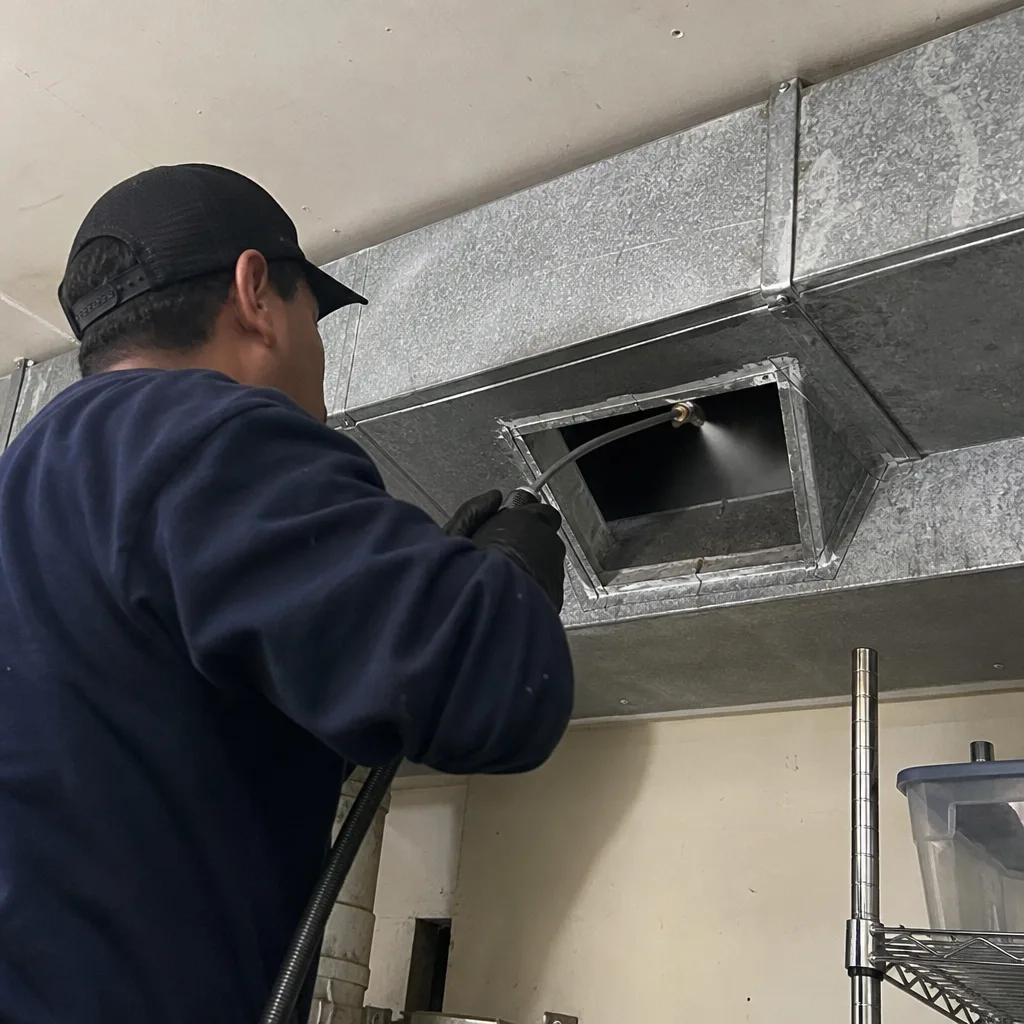
 Whole-home duct cleaning
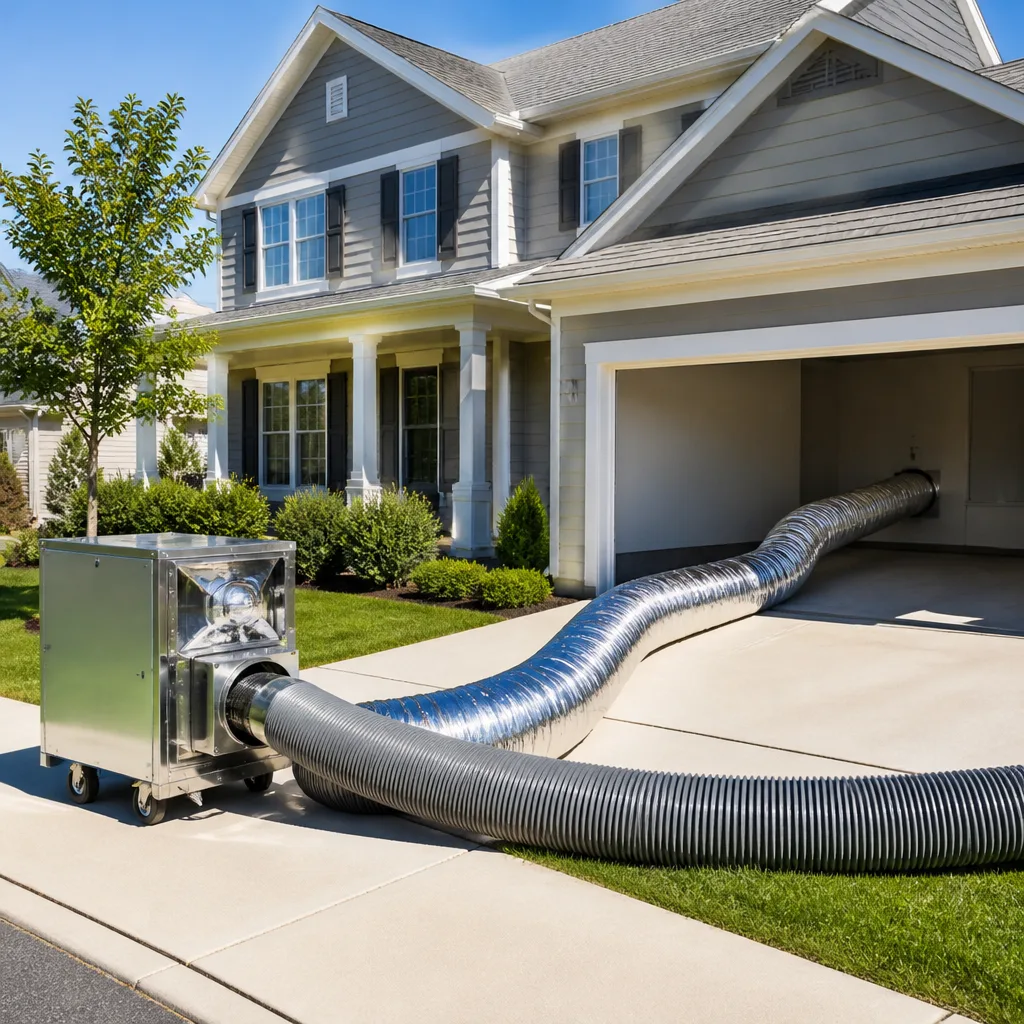
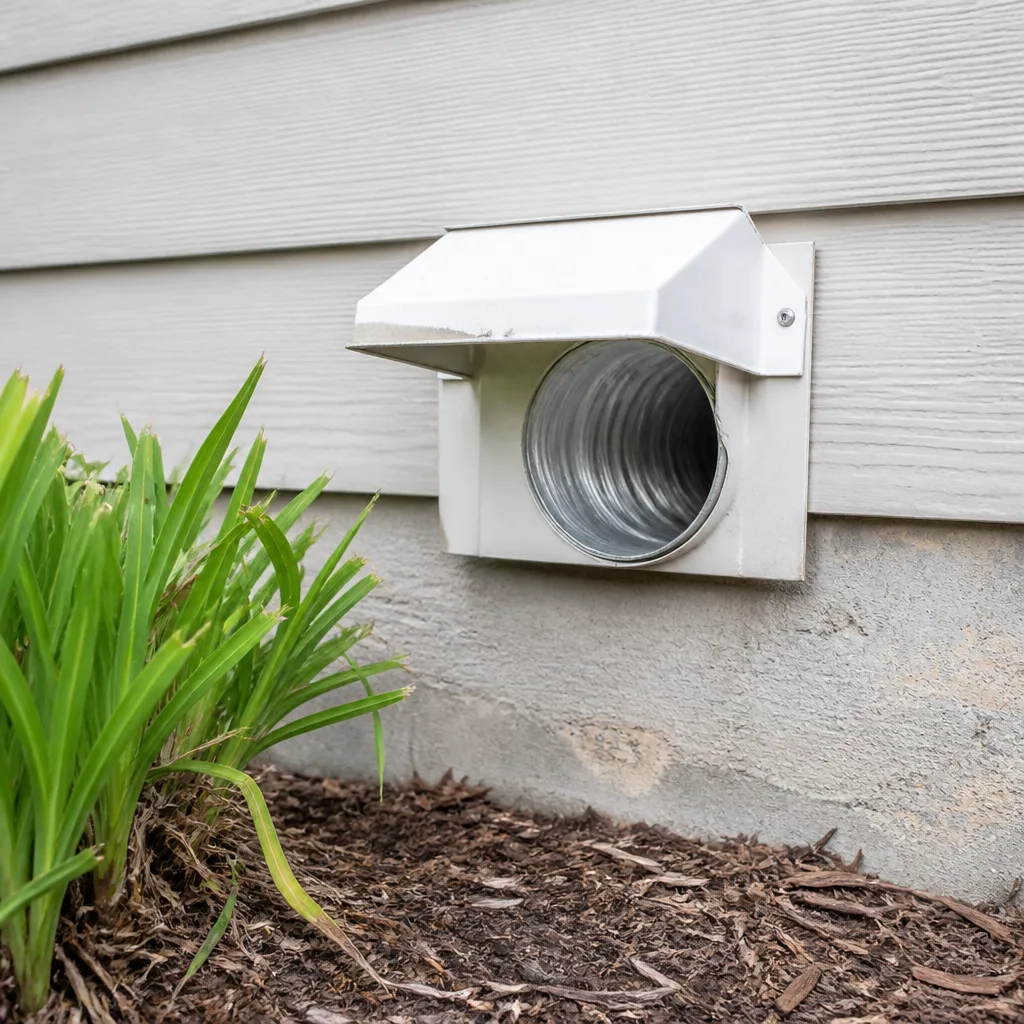 Dryer vent cleaning
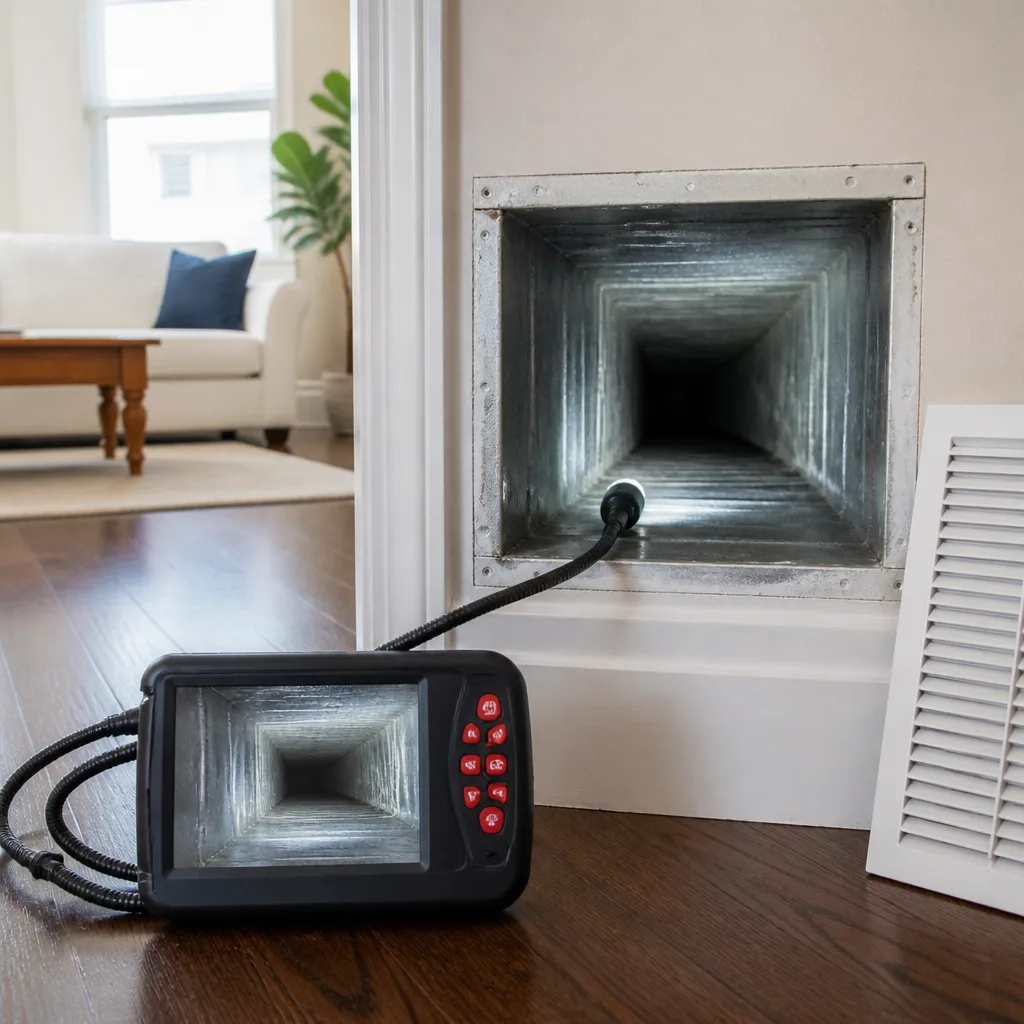 Camera inspection
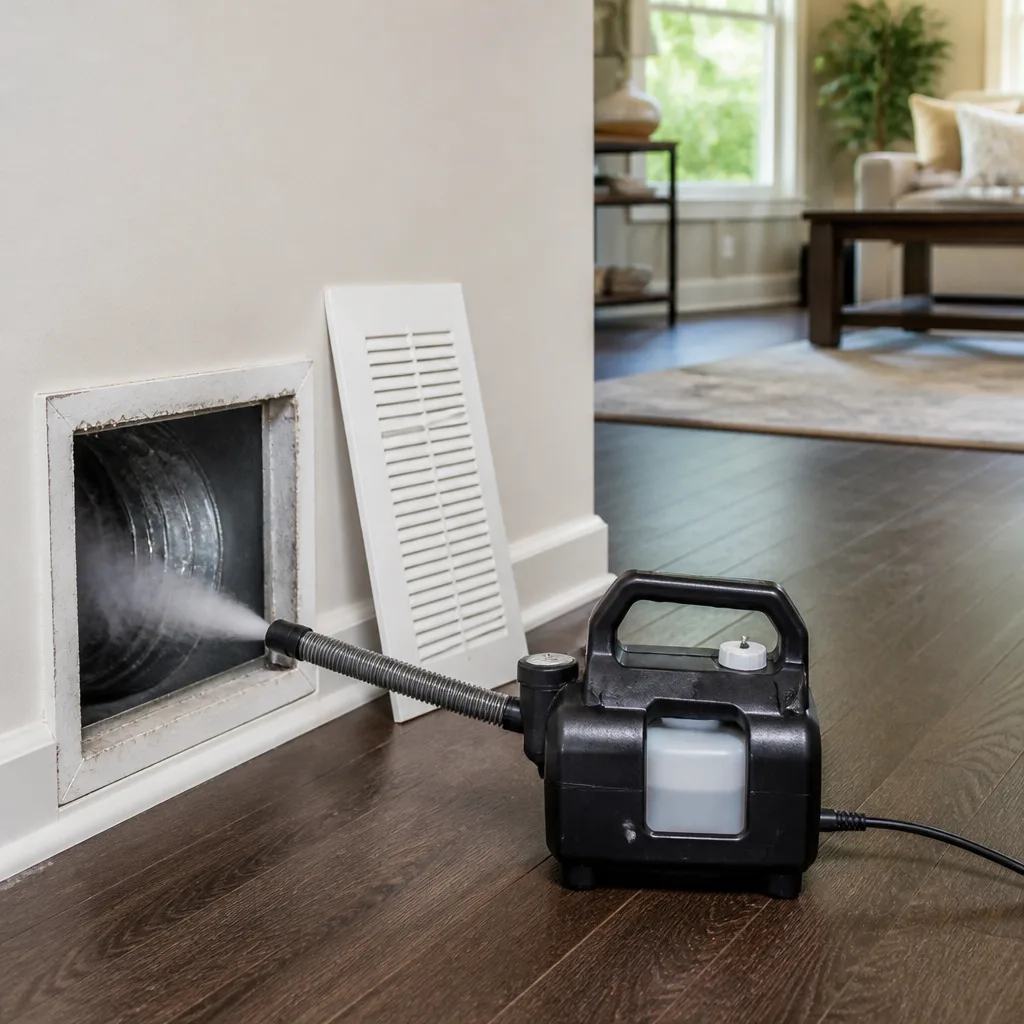 Sanitizing & deodorizing
Whole-system duct and dryer vent check with before-and-after photos - you see exactly what came out of your vents
That "$99 whole-house special" is a bait ad - the real number appears once they are in your hallway, or the "clean" is a shop-vac at the register. We photograph the inside of your ducts before and after instead.
Air Duct Cleaning Warning Signs: A Highbridge Homeowner’s Reference Guide
Most warning-sign articles point at the obvious: dust piling on the supply registers, visible debris around the vent frame, a filter that turns gray too fast. Those are real, but they’re late signals. The more useful ones are behavioral and systemic – a bedroom that never quite warms up, a utility bill that climbed without a rate change, a cough that disappears the moment you leave the house. Here’s the point most guides miss: each of those signals points to a different underlying cause in the duct system, and mistaking one for another leads to the wrong fix. In this Highbridge guide, we’ll walk through odor identification, room-by-room airflow comparison, the difference between contamination and mechanical failure, and the housing-stock signals worth knowing in Highbridge’s older buildings.
Quick Answer
The clearest warning signs that duct cleaning is needed in Highbridge are worsening allergy or respiratory symptoms that ease when residents leave, uneven room-to-room temperatures and airflow, rising heating and cooling costs without a rate change, musty or burning odors at the start of a heating cycle, and visible debris or deterioration at registers and accessible ductwork. Distinguish contamination signals (odor, dust, biological growth) from mechanical signals (weak airflow, hot or cold spots, a cracked heat exchanger, a disconnected run) – because cleaning a mechanically broken system won’t fix it.
Styles & brands we work with
- Whole-home duct cleaning
- Dryer vent cleaning
- Camera inspection
- Sanitizing & deodorizing
Table of Contents
- Contamination Symptoms vs. Mechanical Symptoms
- Odor Identification: Musty, Burning, and Chemical Smells
- Room-by-Room Airflow Comparison as a Diagnostic Tool
- Signs You Have a Duct Leak, Not Just Dirty Ducts
- Warning Signs Specific to Highbridge’s Older Housing Stock
- What Rising Energy Bills Are Actually Telling You
- Respiratory Patterns That Point to the Duct System
- Common Mistakes to Avoid
Contamination Symptoms vs. Mechanical Symptoms
The single most useful distinction in this whole guide is the one most homeowners never make: is your duct system dirty, or is it broken? The two produce overlapping symptoms, and confusing them wastes money. A homeowner who calls for a cleaning when the real problem is a cracked heat exchanger gets a cleaner system and an unresolved safety issue. A homeowner who replaces an air handler when the real problem is ten years of accumulated debris in the plenum pays for a new unit that still breathes through dirty ducts.
Contamination symptoms usually track with air quality. They include:
- Musty or earthy odors that appear when the system kicks on
- Visible dust plumes from supply registers at system start
- Allergy or asthma symptoms that worsen in the home and ease outside it
- Dark streaking or staining around register frames and return grilles
- Visible debris, rodent droppings, or fiberglass shed at accessible ducts
Mechanical symptoms track with performance instead. They include:
- Weak airflow at some registers while others blow hard
- Rooms that won’t reach set temperature while the thermostat reads fine
- Short cycling, or a blower that runs but delivers no air
- Burning odors at the start of a heating cycle
- Condensation, ice, or unusual noises from the air handler
A cracked heat exchanger falls squarely in the mechanical category and is a safety concern, not a cleaning job. So does a disconnected flex run inside a wall cavity – the supply feels weak because the air is escaping into the wall, not because the duct is clogged. When we open a system in Highbridge, we’re diagnosing both categories at once before we clean anything. That’s part of why our approach uses professional-grade Rotobrush and Nikro cleaning systems on the duct pathway, while the mechanical inspection happens alongside the cleaning, not after it.
Odor Identification: Musty, Burning, and Chemical Smells
The smell is often the most honest signal a duct system gives you, because odor carries from wherever the air is actually traveling. The trouble is that homeowners lump all “bad smells from the vents” together, when each odor has a specific meaning. Read the odor before you schedule anything.
Musty or Earthy Odor
A musty smell that appears only during the first 10 to 15 minutes of furnace operation each fall is almost always biological growth on the heat exchanger or in the supply plenum – not in the ducts themselves. The heat cycle warms a damp, dark environment where mold and mildew have been quietly colonizing all summer, and the odor rides the air out through the registers until the surface dries. Cleaning registers won’t fix this. The growth is upstream of the registers. Handling it correctly means inspecting the plenum and heat exchanger, treating the biological growth, and confirming a moisture source isn’t still feeding it. Our team uses Abatement Technologies air-filtration equipment on jobs where contaminant-level remediation is needed, so the spores are captured during the work rather than pushed into living space.
Burning or Smoky Odor
A faint burning smell at the start of a heating season that fades within a few minutes is usually normal – dust burning off the heat exchanger after months of disuse. A burning smell that persists, or that shows up mid-season, is not normal. It can indicate a failing blower motor, an overheating component, electrical arcing, or blockage in the flue pathway. Turn the system off and have it inspected before running it again. This is not a duct-cleaning call; it’s a safety call.
Chemical or Off-Gassing Odor
New construction, fresh paint, new carpet, new furniture, or a recently installed HVAC component can off-gas solvents and volatile organic compounds into the return air stream. If the smell is strong and lingers for weeks rather than days, the return pathway may be pulling air from a space it shouldn’t – a garage, a crawlspace, a storage room. A duct inspection traces where that air is coming from and whether the return is properly sealed off from contaminated zones.
Rodent or Ammonia Odor
A sharp, ammonia-like or urine odor points to rodents in the duct system. Droppings and nesting material create a genuine contaminant problem, and cleaning goes only so far – the entry points have to be sealed or the problem returns. Any contractor who quotes you a cleaning without discussing seal-up hasn’t fully diagnosed the job.
Room-by-Room Airflow Comparison as a Diagnostic Tool
You can do a useful first-pass diagnostic yourself with no tools beyond a strip of tissue or a light piece of paper. The point isn’t to replace a professional airflow test – it’s to arrive at the conversation with real observations instead of “the house feels uneven.” In our experience, homeowners who’ve done this one simple step save time and get to a correct diagnosis faster.
- Set the system to fan-only and let it run 10 minutes. This lets airflow stabilize across all runs.
- Walk to every supply register, room by room. Hold a strip of tissue an inch from the grille and note how far it deflects. Strong, weak, or none.
- Write the reading down next to each room. Don’t trust memory – the pattern only shows up when you see it side by side.
- Note rooms that are always hot in summer or cold in winter. Cross-reference with your readings. Weak airflow plus a temperature complaint is a strong signal.
- Check each return grille the same way. A return that pulls nothing while the system runs points to blockage or a disconnected return run.
- Look for patterns. One weak register at the far end of a run hints at a long or leaking flex line. All registers weak points to a blower, filter, or main-trunk problem.
- Repeat in the opposite season. A pattern that flips between heating and cooling catches imbalances a single-season check would miss.
If one or two rooms read noticeably weaker than the rest, the likely causes are a leaked or disconnected run, a partially closed damper, or an undersized branch. If every room reads weak, the filter, blower, or main trunk is the suspect. Neither of those is a cleaning problem on its own. But when strong airflow carries visible dust, or weak airflow comes with odor, you’re likely looking at a combination – contamination plus leakage – which is exactly the pattern we see most often in Highbridge’s older buildings. Sealing the leaks matters as much as cleaning the pathway, because a leaky duct undoes everything you just cleaned.
Signs You Have a Duct Leak, Not Just Dirty Ducts
Here’s a distinction that changes how the whole job gets priced: cleaning a leaking duct system makes the contamination problem worse, not better. When a supply run leaks into a wall cavity or attic, the system draws unfiltered air from that cavity back into the living space on the return side. Clean ducts with an open leak pull in dust, insulation particles, and – in older buildings – fiberglass shed from the wall assembly. The system stays “dirty” no matter how many times you clean it.
The signals of a leak rather than contamination are specific:
- Rooms that never match the thermostat’s setpoint even when the air handler runs normally
- Dust streaks on ceilings, walls, or insulation facing supply runs – air is blowing through the wall, not just out of the register
- Whistling or hissing at joints and register boots when the fan runs
- Higher dust in one room than the rest of the house, especially a basement or utility room near the air handler
- Pressure differences you notice as a door that pulls itself shut or pushes open when the system runs
- Energy bills climbing while run time stays steady – the system is working as hard as before but losing a share of its air
If two or more of those match, an inspection should trace the leak before cleaning. Duct repair and sealing is a distinct service from cleaning, and a proper contractor should tell you which one you actually need. When we run a full-system inspection, the leak check and the cleanliness check happen in the same visit. If we find a disconnected run in a wall cavity, we fix or seal it before the cleaning stage, because doing it in the reverse order wastes the cleaning. If we find a system that’s tight but loaded with debris from years of buildup, cleaning alone handles it.
What we look for in Highbridge’s older housing is compounded: original galvanized trunk lines with seam separation, flex runs that have collapsed under a joist, and register boots that were never properly sealed to the wall. Any of those can let unfiltered air into the return pathway.
Warning Signs Specific to Highbridge’s Older Housing Stock
Highbridge’s housing stock includes a lot of pre-war buildings where the original ductwork, insulation, and mechanical systems are still in service or were modified by multiple generations of contractors. That history creates warning signs a newer home simply doesn’t have. When we step into an older Highbridge property, this is what we’re specifically looking for.
Asbestos-Wrapped Ducts
Older duct runs – especially in basements and utility spaces of pre-war buildings – can still carry wrap or tape that contains asbestos. If you see a white, chalky, fibrous wrap, a paper-faced tape that crumbles when touched, or a corrugated wrap that has started to fray, leave it alone and have it tested. Disturbing asbestos-containing material is a serious hazard, and any cleaning or repair work near it needs a professional assessment first. This isn’t a step to guess at, and it isn’t a step to skip.
Deteriorated Interior Fiberglass Liner
Many older duct systems are lined with fiberglass on the inside of the sheet metal to reduce noise and heat loss. Over decades, that liner breaks down. Signs of failure include visible fiberglass shed at the registers, a rough or fuzzy texture inside an accessible duct, and a chalky white dust in the airstream. Once the liner is breaking down, cleaning alone becomes tricky – aggressive cleaning can disturb the failing liner further. Liner replacement or lining repair is the correct fix, and it’s why we always inspect the interior of accessible ductwork before bringing a cleaning tool through it.
Original Galvanized Steel Corrosion
Galvanized trunk lines from the mid-twentieth century develop rust in conditions of chronic moisture – leaky humidifiers, condensation in the cooler months, or a damp basement. Rusty spots along a seam are a triple signal: contamination source, leak point, and (if advanced) structural weakness in the duct itself. Surface rust gets treated and sealed; through-wall rust means the section is replaced.
Seam Separation and Duct Tape Failures
Original duct tape – the gray fabric-backed tape – wasn’t designed to hold ductwork together long-term. When it fails, it fails everywhere at once. In older Highbridge properties the pattern often shows up as a systemic air-loss problem rather than one isolated leak. Pulling and resealing with proper mastic and foil tape corrects the whole run.
What Rising Energy Bills Are Actually Telling You
A rising utility bill is a symptom, not a diagnosis, and treating it as a diagnosis is where homeowners get talked into the wrong work. Before you attribute a bill jump to dirty ducts, rule out the boring reasons.
- Compare the same months, year over year. A winter heating bill against a summer cooling bill tells you nothing. A February bill against last February with the same weather conditions is the only fair comparison.
- Confirm there’s been no rate change. Utility rate adjustments happen, and they show up on every bill. A rate increase isn’t a house problem.
- Check filter condition and thermostat schedule. A clogged filter or a thermostat program that got reset costs money and mimics duct failure.
- Then attribute the rest to the system. Once weather, rates, and controls are ruled out, the remainder usually comes from either equipment efficiency decline or duct leakage.
Duct leakage in older home systems is a common contributor to that leak-and-waste pattern. Highbridge’s older housing stock means seal-up jobs we handle here are often more involved than a newer build with tight flex duct. The good news is that sealing is one of the highest-return fixes on the list, because it stops the loss rather than masking it. Clean ducts without a tight system still lose their conditioned air to the wall cavity each cycle. Clean plus sealed keeps that air where it was paid for.
Respiratory Patterns That Point to the Duct System
Air quality symptoms are the hardest to attribute because they’re incremental – they don’t announce themselves in a single afternoon. In our experience, the diagnostic pattern most worth watching is the one that follows geography rather than time. Respiratory symptoms that cluster by location, not by season or by activity, are the ones that most often trace back to the duct system.
Specifically:
- Worse in one part of the house, better in another. A bedroom that aggravates allergies while the living room doesn’t is a signal, especially if the bedroom is at the far end of a long supply run with weak airflow.
- Better within a day or two of leaving the home. A physical environment causing symptoms should stop causing them when you’re not in it. Vacation, hotel stays, and workdays that improve symptoms are useful data points.
- Worse during heating or cooling season, better in the shoulder months. The system cycling more means the airstream carries more.
- One household member affected more than others. This usually means that member is more sensitive so the same exposure hits harder, not that only one person is being exposed.
- Symptoms that flare only after system startup. A dust plume at startup carries concentrated contamination for the first few minutes of the cycle.
We don’t make health claims, and if you’re concerned about symptoms, your doctor is the right first call. What we can do is inspect the system and tell you what’s physically in the airstream. When we handle a job with a sensitivity concern, our technicians use Abatement Technologies air-filtration equipment to capture particulate during the cleaning, and Guardsman-grade protective products in the sanitizing stage, so the remediation is measured rather than improvised.
Common Mistakes to Avoid
- Cleaning before diagnosing. Booking a cleaning without a mechanical inspection is the most common mistake we see in Highbridge – it costs you money twice if the real issue is a cracked heat exchanger, a disconnected run, or a failing air handler. Diagnose first, then clean.
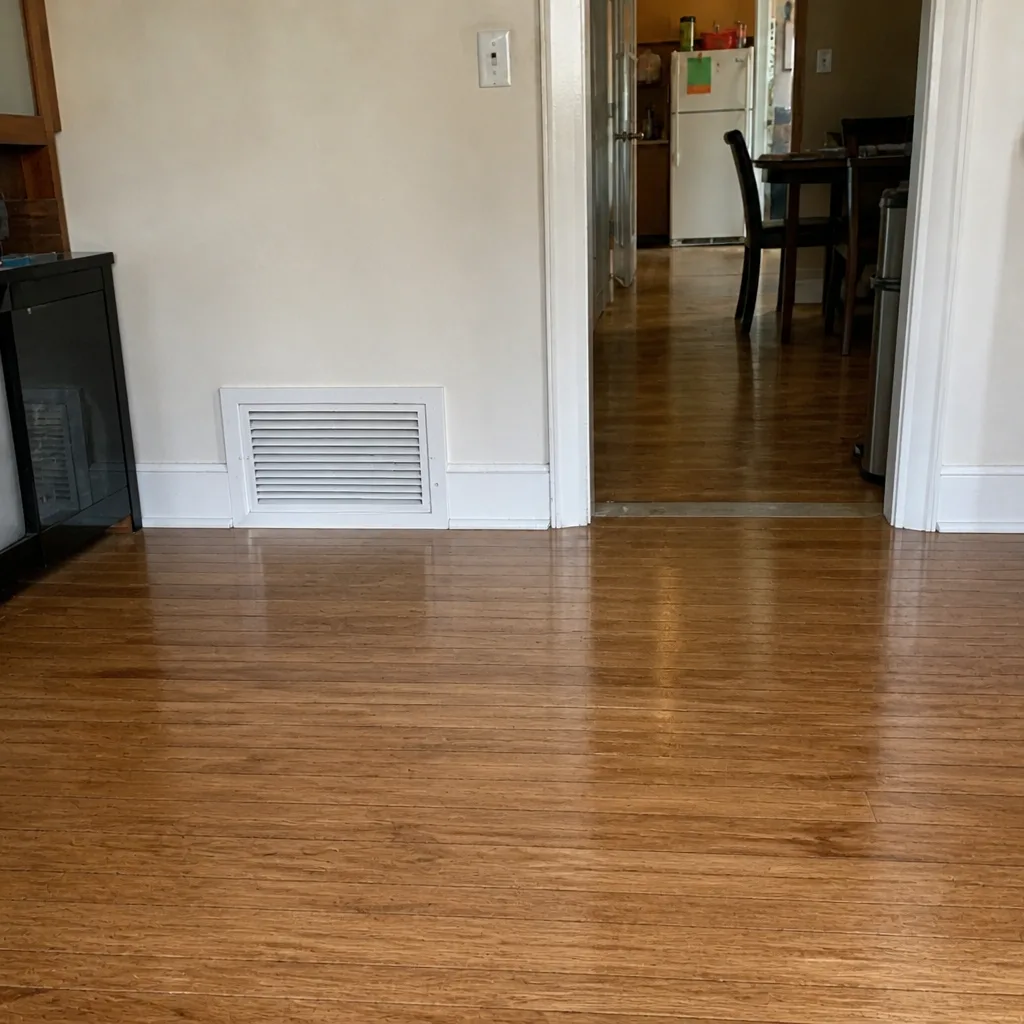
- Letting a contractor clean without showing you the inside of the ducts. Before-and-after photos of your own duct interior, at the same points, should always be available. A contractor who can’t or won’t show you those photos hasn’t really shown you the work.
- Accepting per-vent pricing. Per-vent pricing is a marketing device, not a service quote. It rewards a homeowner for choosing a lower vent count, not for actually cleaning the whole system. Ask for one flat price for the full system, agreed before work starts.
- Treating the musty fall odor with a box-store fogger. A spray bomb masks the smell for a season and does nothing about biological growth on the heat exchanger or in the plenum. It’s the wrong tool for the wrong location on the system.
- Ignoring the driest of the signals – the ones you can’t see. Leaks in a wall cavity, a collapsed flex run, or a separated seam aren’t visible without a camera. Skipping the inspection because the ducts “look fine from the register” misses these.
- Cleaning without sealing. A cleaned duct system with open leaks re-contaminates itself within months. In Highbridge’s older buildings, where flex duct and old galvanized often share a pathway, this is more likely than in a newer construction with tight seams.
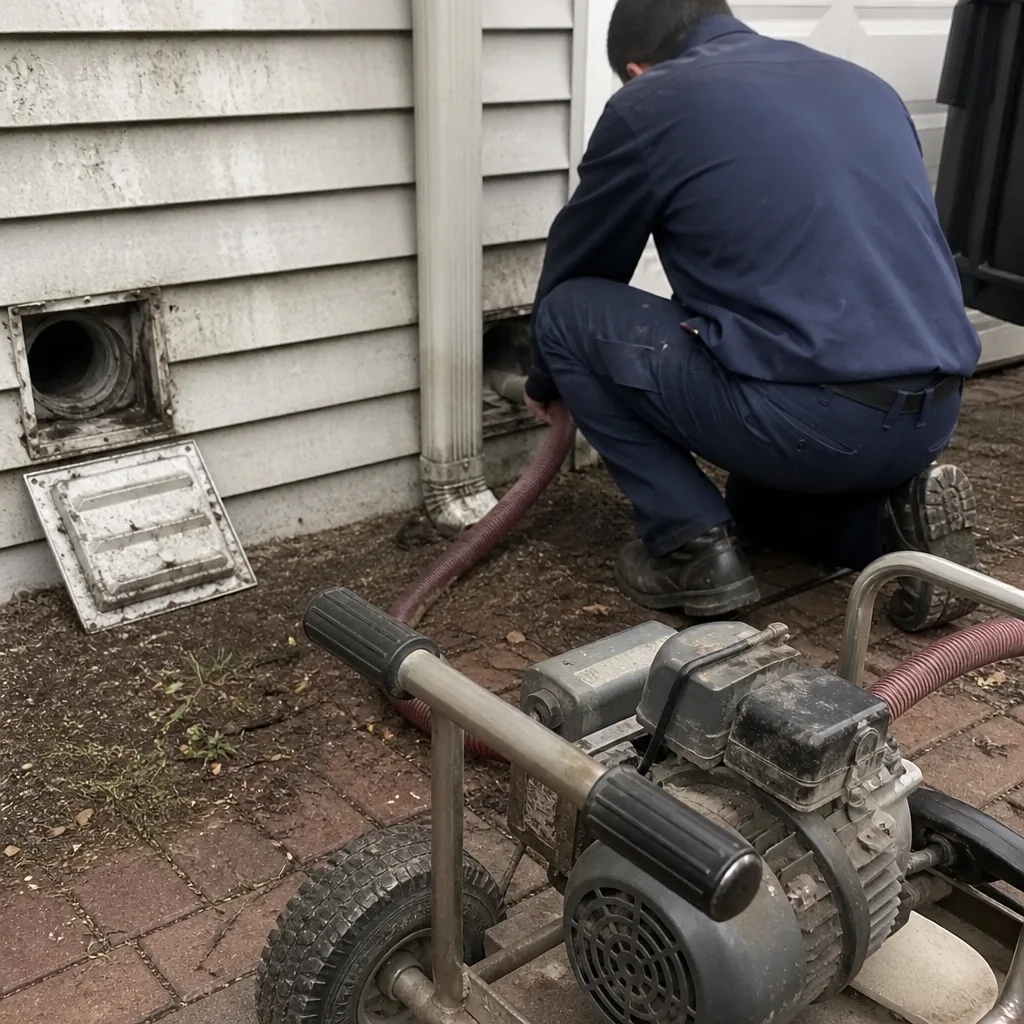
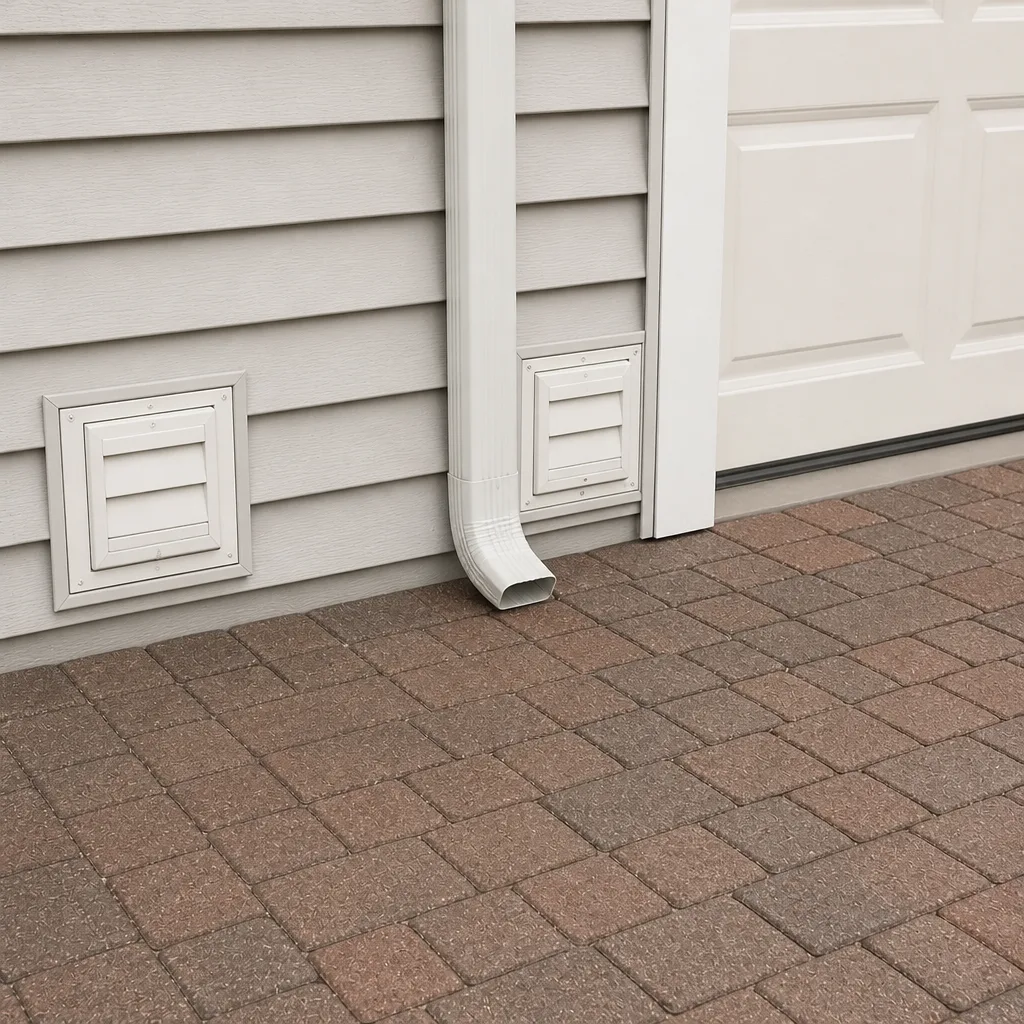
- Leaving the dryer vent off the to-do list. Dryer-vent cleaning addresses fire-risk buildup, and it’s part of the same air-safety conversation as duct cleaning. Skipping it isn’t a savings – it’s an unaddressed safety issue.
See the difference
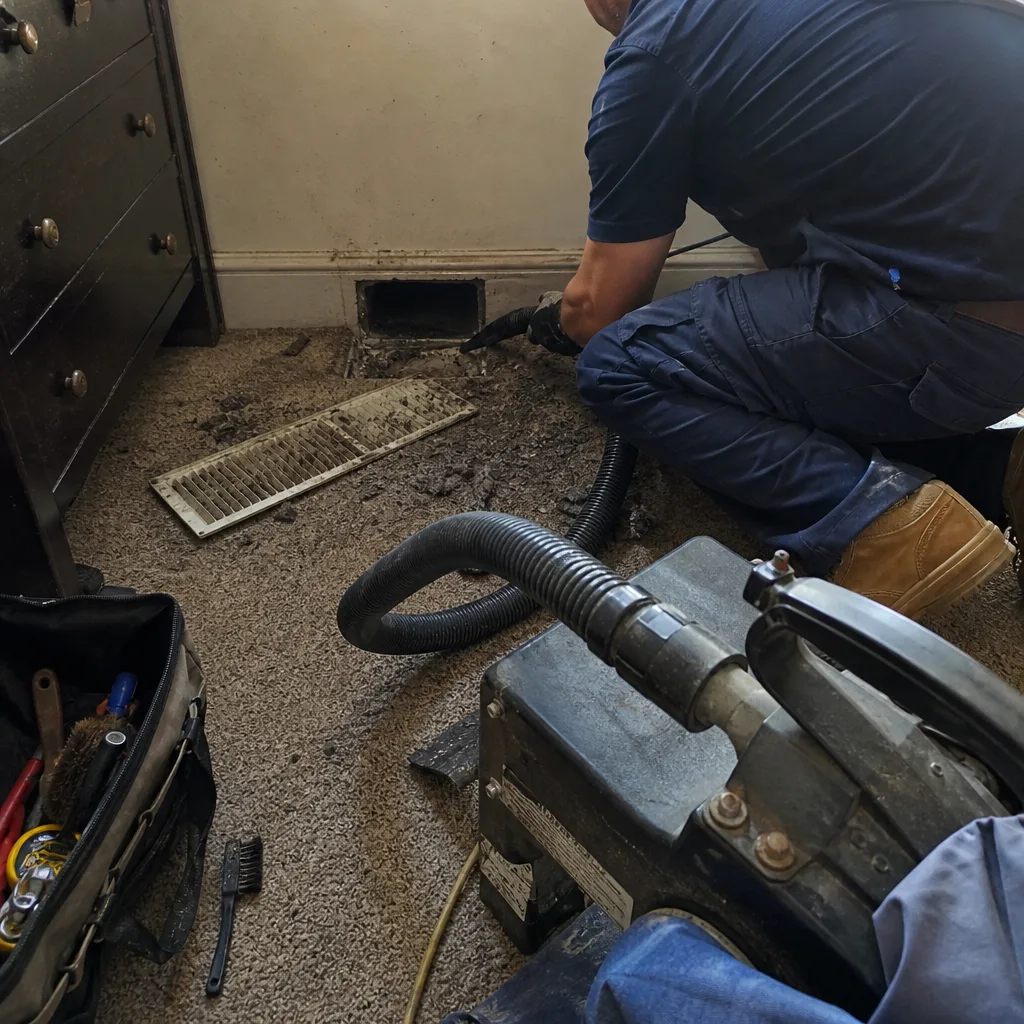 Before
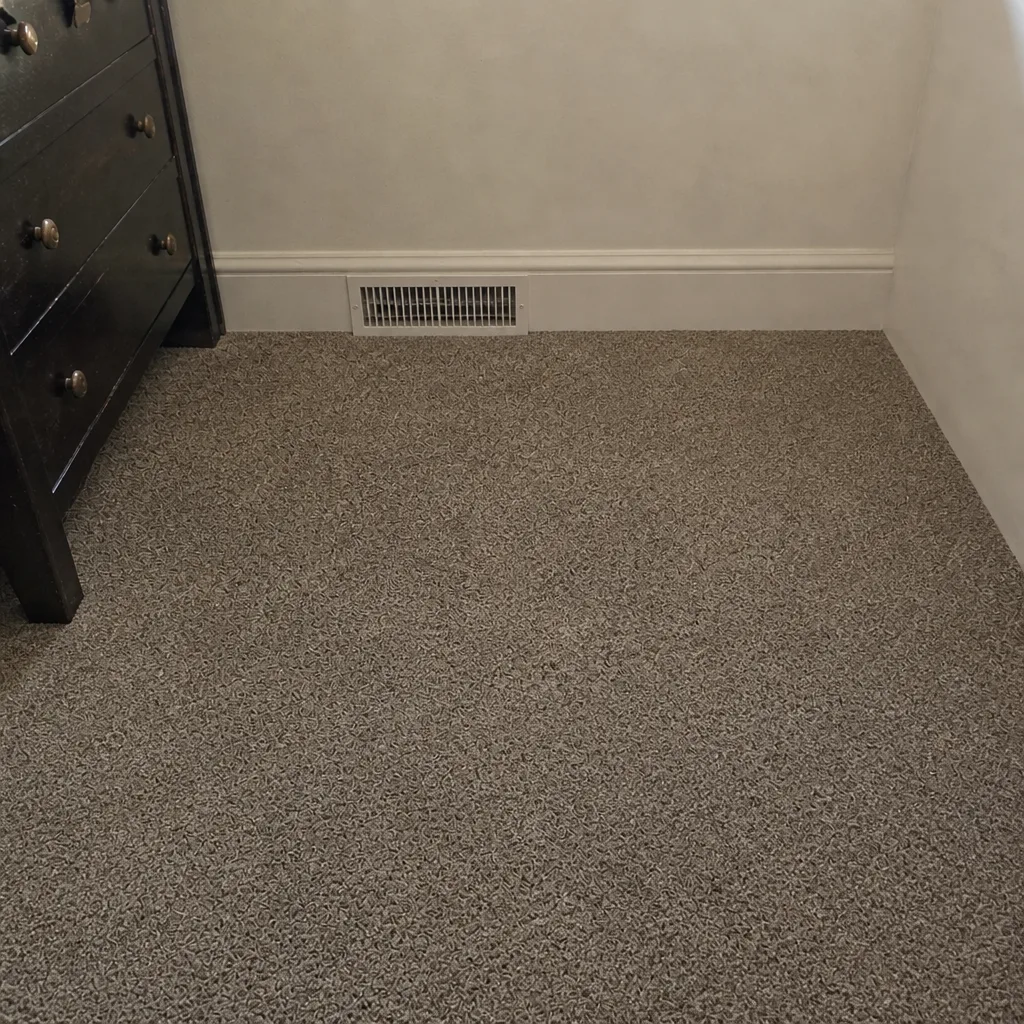 After
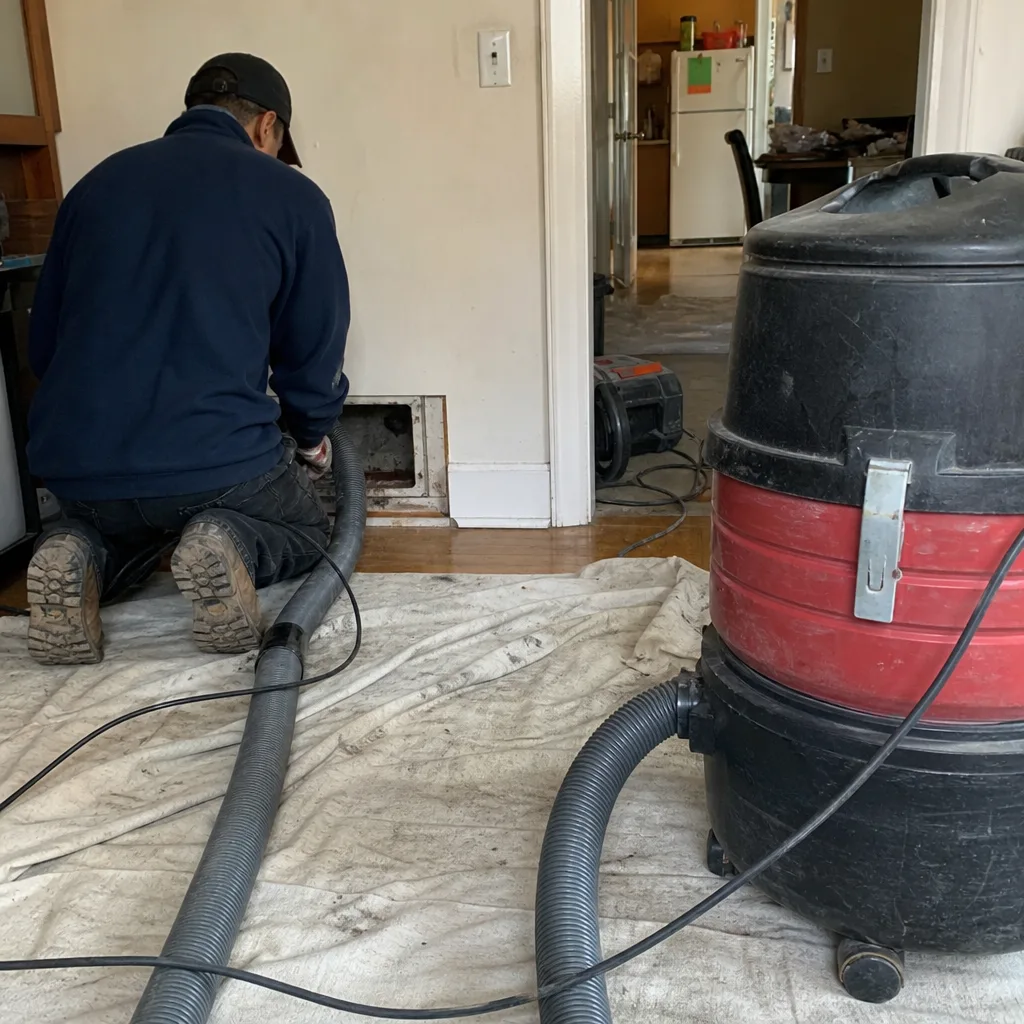 Before
 After
 Before
 After
When to Call a Professional
Some warning signs you can keep an eye on. Others need a trained set of eyes inside the system within days. Call for an inspection if you’re seeing any of the following. Persistent musty odor at the start of each heating cycle. Burning odor at any point in the season – shut the system off and call immediately. A room-to-room airflow pattern where one or two rooms read consistently weak. Rising energy bills after weather, rates, and controls are ruled out. Visible deterioration at supply or return grilles, dark streaking, or fiberglass shed at registers. Anyone in the home whose respiratory symptoms resolve away from the house. Signs of asbestos wrap, deteriorated fiberglass liner, or water-stained duct insulation in an older Highbridge building. Air Duct Cleaning Highbridge offers free estimates in Highbridge. Call (888) 219-1385. We answer 24/7. Fast dispatch from 7am to 7pm, Sunday through Friday.
Frequently Asked Questions
Dust at the register is a surface issue; dust inside the system that blows back out within minutes of system startup is a duct-cleaning signal. The distinguishing test is a plume: watch a supply register for the first 30 seconds after the fan kicks on. A visible dust cloud means the contamination is upstream of the register and being delivered on every cycle. Surface dust you wipe off and see return slowly is usually filter-and-return-side maintenance. Call (888) 219-1385 for a free estimate – our team can confirm with a camera inspection.
Air duct cleaning is priced per job, not per vent, and the final price is set by a written estimate after we’ve inspected the system. There’s no honest number that applies to every home in Highbridge, because older buildings here vary widely in duct configuration, liner condition, and how many zones need attention. What you should insist on is one flat price for the full system, agreed before work starts, with no per-vent add-ons once the truck is in the driveway. Call (888) 219-1385 for a free estimate.
A very low quote is almost always a scope reduction – fewer vents cleaned, no inspection, no sealing, consumer-grade equipment. Cleaning a system with a shop-vac grade machine and skipping the mechanical inspection produces a photo of a cleaner register and a system that re-contaminates in months. If you compare two quotes and one is dramatically cheaper, ask exactly what equipment they use, what the inspection includes, and whether they’ll show you before-and-after photos of your own ducts at the same points. If any of those answers are vague, that’s the answer. Call (888) 219-1385 for an exact written estimate – estimates are free.
Ask for before-and-after photos of the interior of your ducts, taken at the same points. Photos at the register grille alone don’t count – the work is inside the trunk lines and plenum, not at the grille. A professional team takes those photos as part of the job, not as an extra. When we finish a job in Highbridge, the photos are part of the handoff, because “we found X, here’s what it looks like now” is the only version of the conversation that’s verifiable. Call (888) 219-1385 for a free estimate.
There’s no universal schedule – it depends on the home, the occupants, and what’s happened in the ducts. A well-maintained newer build with tight filtration may go many years between cleanings. Older Highbridge housing with original galvanized ducts, fiberglass liner, or a history of renovation work needs inspection more often. The signs in this guide are the right trigger, not the calendar. If the sign is there, call (888) 219-1385 for a free estimate.
Sometimes yes, more often only with an interior inspection. A register that whistles, hisses at joints, or blows noticeably weaker than others in the same zone is a leak signal, not a dirt signal. Dust streaks on the ceiling or wall near a supply run, a door that pushes itself open when the fan runs, and uneven room temperatures all point to leakage. Camera inspection inside the duct confirms it. If two or more of those match, have the leak traced before cleaning. Call (888) 219-1385 for a free estimate.
The Bottom Line
The warning signs worth acting on are the systemic ones – because they point to a specific cause, not a generic “dirty ducts” story. If your symptoms are odor and allergy-driven, focus on contamination. If they’re performance-driven (weak airflow, hot or cold rooms, rising bills), focus on leakage and the mechanical side. In Highbridge’s older housing, expect overlap. Before-and-after photos of your own ducts, one flat price per system, and one written estimate are the fair standard for either job. Air Duct Cleaning Highbridge handles cleaning, repair and sealing, and air-quality upgrades in one engagement – inspect, clean, seal, sanitize – so you don’t schedule a second vendor for a fix a qualified team should have caught on the first visit.
If you’re ready to schedule an air duct cleaning or a full HVAC cleaning, we offer free estimates in Highbridge. Want the dryer vent checked while we’re there? That’s part of the same visit – dryer vent cleaning is available alongside the duct work, which puts the fire-safety item on the same appointment as the air pathway. Call (888) 219-1385. We answer 24/7. Fast dispatch from 7am to 7pm, Sunday through Friday.
Written by the team at Air Duct Cleaning Highbridge.